Frame
Turn the business need into a measurable decision.
A complete, practical path from Python foundations to machine-learning systems you can evaluate, deploy, monitor, and defend.
One-time purchase · Instant digital delivery · Secure Stripe checkout
A model is only one component of a real decision system. The book connects theory, implementation, evaluation, deployment, and responsible operation in one coherent path.
Turn the business need into a measurable decision.
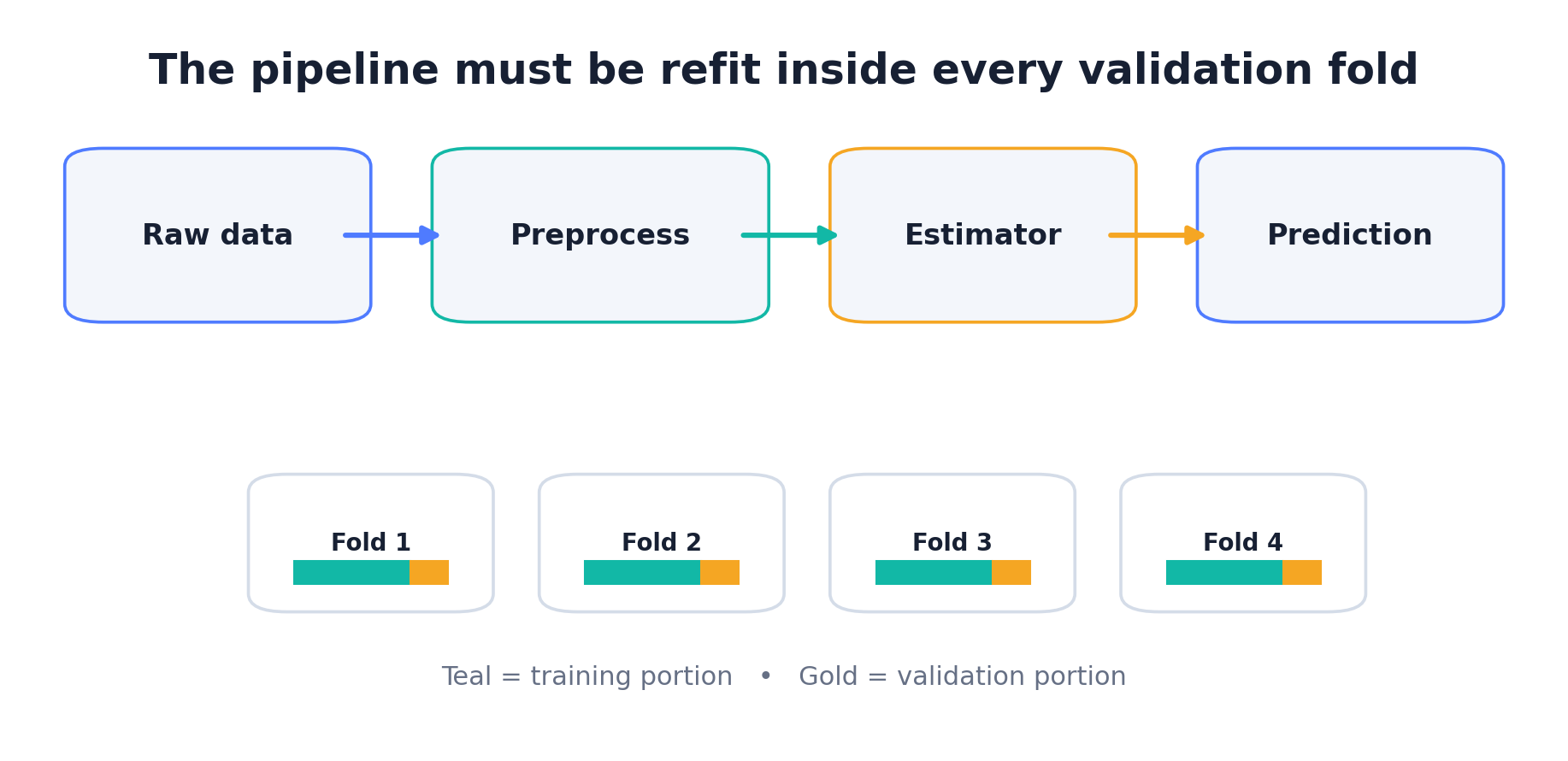
Validate inputs and keep leakage out of the pipeline.
Train and compare models through reproducible experiments.
Choose metrics and thresholds from real constraints.
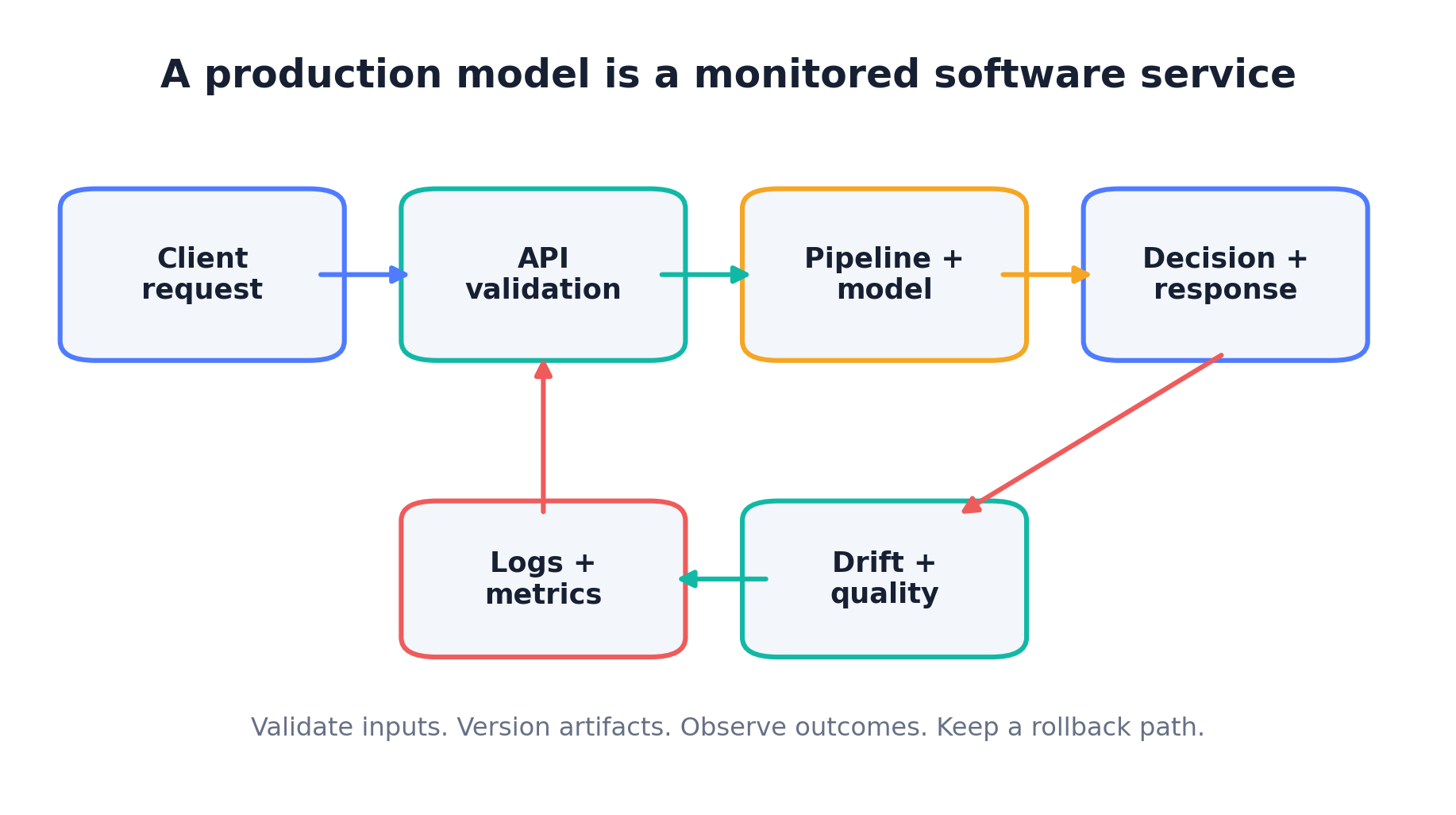
Deploy, monitor, document, and prepare rollback.
25 focused chapters connect concepts to the engineering decisions that make machine learning reliable.
A companion project with pipelines, schema checks, a FastAPI service, and tests.
pipeline = Pipeline([
  ("validate", SchemaCheck()),
  ("model", classifier)
])
all checks passedTwo capstone specifications produce inspectable evidence of real skill.
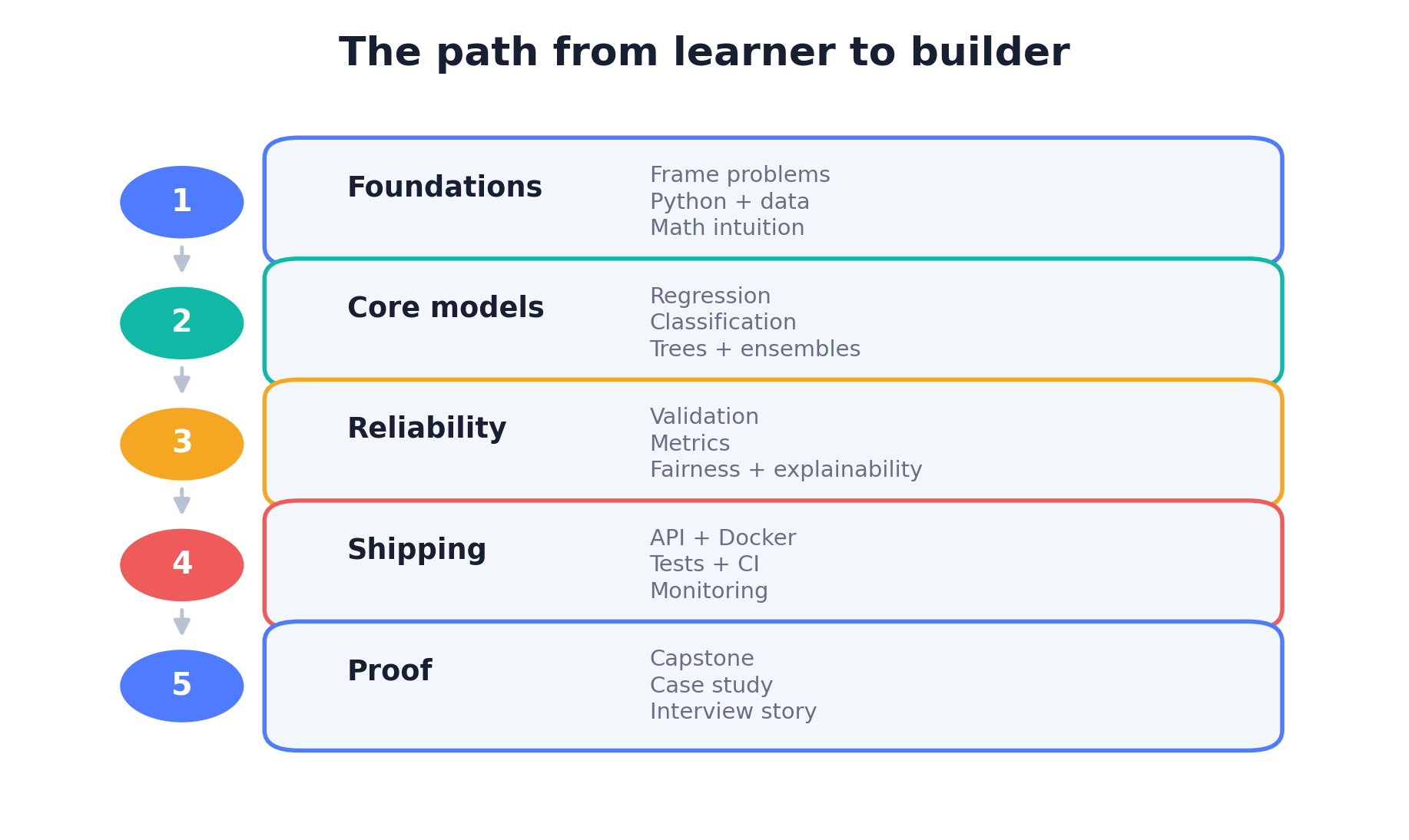
Follow the full 12-week path or use the accelerated four-week route included in the book.
Problem framing, Python, essential math, and data quality
Regression, classification, trees, metrics, and validation
Clustering, PCA, anomaly detection, and useful features
Neural networks, PyTorch, images, text, and transfer learning
Explainability, testing, FastAPI, Docker, and monitoring
Two end-to-end capstones and portfolio delivery
Professional diagrams, concise explanations, and implementation guidance make each chapter useful at the desk—not just easy to skim.
No instant-expert promises. Just the structure, practice, and artifacts required to build stronger machine-learning judgment.
The complete Independent Learner Edition and every companion resource.
You should understand basic Python syntax, functions, loops, dictionaries, and classes. The machine-learning concepts begin from first principles.
No. It is a structured digital e-book plus a runnable companion project, designed for focused reading and hands-on building.
Python, NumPy, pandas, scikit-learn, PyTorch, FastAPI, Docker, testing, and practical monitoring concepts.
Yes. The companion codebase includes schema checks, a leakage-safe pipeline, evaluation, serialization, an API, and tests.
Use an email address you can access during checkout. Your receipt and digital-delivery information are sent there.
The package includes a 14-day satisfaction guarantee. See the Refund Policy for the full requirements.